
- A WordPress SEO consultant audits your site’s technical health, restructures content, configures the right plugin stack, and runs ongoing optimisation to build organic visibility.
- Signs you need a consultant: stagnant traffic, missing meta tags, slow pages, thin content, and no clear keyword strategy.
- Before signing, ask direct questions about audits, content writing, page speed, reporting, and plugin preferences.
- Five core SEO concepts matter most: crawlability, indexation, on‑page optimisation, authority, and user experience.
- Realistic timelines run 90 days to 6 months for meaningful movement; SEO is a continuous process, not a one‑time fix.
What does a WordPress SEO consultant actually do?
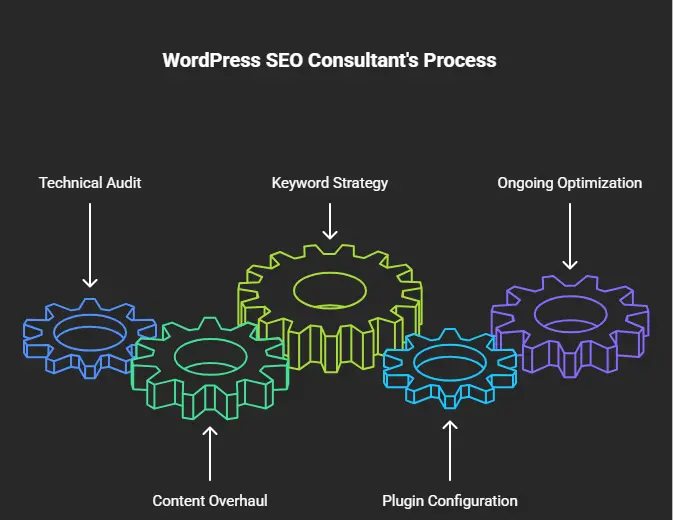
A WordPress SEO consultant audits your site, fixes technical and on‑page problems, configures the right plugin stack, builds a keyword‑driven content plan, and runs ongoing optimisation.
In practice, the work starts with a deep‑dive technical audit that uncovers what you cannot see: broken meta tags, broken links,bloated images, slow page speeds, and missing content structure. From there, the consultant rewrites thin pages around high‑intent keywords, restructures your site architecture, and ensures Google can crawl and index every important page. I have run over 50 of these audits across industries as varied as diamond jewellers, waterproofing, and wholesale leather manufacturing. One project that comes to mind is a high‑end diamond jeweller who came in ranking for only a handful of keywords and had never undergone a real technical audit. After a content overhaul, image conversion to WebP, and a fresh keyword strategy, fixing all the broken links, the site moved from 4 page‑one keywords to 13 in 90 days. This resulted in more than 450 clicks over a 3 month period, when comparing the previous 3 months before we took over the SEO.
A consultant also selects and tunes your WordPress SEO plugin stack (Yoast SEO, Rank Math, or others) to handle real‑time content analysis, XML sitemaps, and schema markup. Then the ongoing work kicks in: monthly monitoring, new keyword expansion, backlink building, and adaptation to algorithm shifts. At Local Hero Digital, our SEO services follow exactly this model, with custom strategies built on a custom audit and tailored monthly retainers that range from R6,500 to R18,000 per month, depending on keyword volume, content requirements, and the depth of implementation.
“Whether you’re based in Johannesburg, Pretoria, or Durban, these fundamentals apply everywhere in South Africa”
How do you know if you need a consultant versus an in‑house hire
You need a consultant when your site suffers from stagnant organic traffic, hidden technical bloat, or a lack of in‑house SEO expertise, and hiring a full‑time employee is too costly or impractical.
Many business owners first notice the warning signs: traffic flatlining for months, missing meta descriptions on key pages, or a site that feels sluggish on mobile. An in‑house hire ties you to a single salary, benefits, and a learning curve, while a consultant brings cross‑industry experience from dozens of audits and immediate access to a proven process. I have audited sites where 27 of 40 images were heavy, unoptimised JPEGs, and the owner had no clue because the pages still loaded, just painfully slowly. A consultant spots those patterns instantly because they have seen them across waterproofing, cleaning, and B2B wholesale sites alike.
From a cost perspective, a monthly retainer gives you a team’s worth of expertise without the overhead. You pay for output, not a desk. If your WordPress site has fundamental architecture problems (missing H1s, broken redirect loops, skewed Google Analytics tracking), a consultant’s ai search visibility audit will map the fixes before you commit to a long‑term contract. That diagnostic step alone often reveals whether the site needs a consultant’s ongoing hand or a one‑time rebuild.
What questions should you ask an SEO consultant before signing?
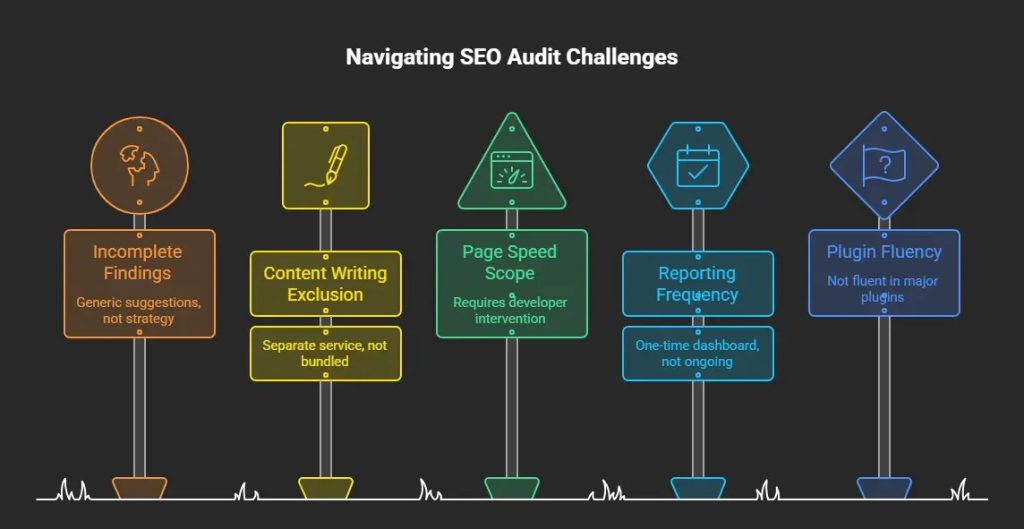
Ask direct questions about the audit scope, what is and is not included, reporting frequency, timeline expectations, and the plugins they rely on.
Before you sign any retainer, get clear answers to these five questions:
- What does your audit cover, and will I see the full findings? The audit should expose broken meta tags, crawl errors, page‑speed bottlenecks, and content gaps, not just a list of generic suggestions. I provide a complete strategy mapped to the audit so you know exactly what needs fixing.
- Is content writing included? In most engagements, content writing is a separate service. Our retainers do not bundle professional copywriting, so you are never paying for generic AI filler. You can integrate your own writer once the keyword plan is set.
- How do you handle page speed? Page speed optimisation is not part of the standard monthly retainer; it is scoped and quoted separately because it often requires a developer’s intervention on the server or theme level.
- What reporting will I receive? You should expect ongoing reports that show keyword movement, traffic trends, and technical health scores, not just a one‑time dashboard.
- Which WordPress SEO plugins do you work with? A competent consultant should be fluent in the major plugins (Yoast SEO, Rank Math, All in One SEO, SEOPress) and explain why they recommend one over another for your site’s complexity.
If a consultant cannot answer these plainly, walk away. If you want to discuss your specific situation, contact us for a paid custom audit and proposal.
What are the 5 most important SEO concepts every business owner should know?
The five concepts that determine whether your site gets found are crawlability, indexation, on‑page optimisation, authority, and user experience.
Every business owner should grasp these because they dictate whether Google can find your pages, understand them, and trust them enough to show them to searchers:
- Crawlability: Can search engine bots access your pages? A consultant ensures your WordPress site has a clean robots.txt file, an up‑to‑date XML sitemap, and no broken internal links that trap crawlers.
- Indexation: Once crawled, do your pages actually get added to Google’s index? Noindex tags, canonical conflicts, and poor site architecture can keep valuable pages out. A consultant audits and fixes these signals.
- On‑page optimisation: Each page needs a unique title tag, a compelling meta description, a single H1, structured subheadings, and keyword‑rich but natural copy. This is the daily work of a WordPress SEO consultant.
- Authority: Google weighs who links to you and how your brand is mentioned across the web. A consultant builds authority through backlink strategies, brand‑signal cultivation, and schema markup that makes your content eligible for rich results.
- User experience: Core Web Vitals, mobile speed, and intuitive navigation are now ranking factors. A slow, clunky site will not hold top positions even with perfect on‑page SEO. The consultant bridges the gap between technical health and real‑world usability.
Together, these five concepts form the backbone of modern AI search optimisation and traditional search dominance, and a good consultant ties them into a single, measurable plan.
Which WordPress SEO plugins does a good consultant work with?
A good consultant selects plugins based on site complexity, but the four most trusted options are Yoast SEO, Rank Math, All in One SEO, and SEOPress. The table below compares their core features so you can understand what a consultant weighs when configuring your stack.
| Plugin | Real‑time Content Analysis | Schema Markup | XML Sitemaps | Redirect Manager | Typical Use Case |
|---|---|---|---|---|---|
| Yoast SEO | Yes | Yes (basic structured data) | Yes | Premium only | Straightforward blogs, small business sites needing readability checks and reliable sitemaps. |
| Rank Math | Yes | Yes (rich schema modules) | Yes | Yes (free) | Feature‑rich sites needing advanced schema, 404 monitoring, and granular control without extra add‑ons. |
| All in One SEO | Yes | Yes | Yes | Yes (premium) | eCommerce and local businesses wanting integrated local SEO, WooCommerce support, and link assistant tools. |
| SEOPress | Yes (content analysis in Pro) | Yes | Yes | Yes (Pro) | White‑label agencies, developers needing unlimited site usage, and privacy‑conscious setups with no data tracking. |
A consultant’s job is not just installing a plugin but configuring it correctly: avoiding duplicate sitemaps, setting proper noindex rules, and ensuring schema types match your content. The wrong configuration can create more indexing problems than having no plugin at all. In my audits, I regularly find sites running two conflicting SEO plugins or missing critical structured data that would make them eligible for rich snippets. Fixing those oversights alone often lifts click‑through rates before we touch a single line of content.
How does a technical site audit reveal hidden WordPress problems?
A recent custom jeweller client came to me ranking for only a handful of keywords, with no clear idea why traffic had stalled. They had a beautiful site, but beneath the surface, the technical foundation was crumbling.
I ran a comprehensive audit and found 27 of their 40 images were heavy, uncompressed JPEGs that choked page speed on mobile. Not a single page had a unique meta description. There were no FAQs, no clear H1 hierarchy, and the blog had not been updated in 6 months. The owner was surprised because the site “looked fine” on the front end. That is the gap a technical audit fills: it reveals what you cannot see by simply browsing your own pages.
The fix was methodical. We converted every image to WebP, added descriptive alt text, and rewrote thin product pages around high‑intent keywords. We restructured the heading hierarchy so every page had a single H1 and a logical flow of H2s and H3s. We built out FAQ sections directly on product pages, answering the exact questions people were typing into Google. The result: 13 keywords reached page one of Google within 90 days. That outcome, from a handful of rankings to 13 page‑one positions, is what a proper ai search visibility audit can trigger when paired with ongoing optimisation.
What does the ongoing work of an SEO consultant look like
Ongoing work involves monthly monitoring, content updates, backlink and brand‑signal building, new keyword expansion, and adapting to algorithm changes.
Once the foundational audit fixes are in place, the consultant shifts to a continuous improvement cycle. Each month, I review ranking movements, crawl reports, and search console data to spot new opportunities or emerging issues. Content is refreshed to keep it relevant and to capture new long‑tail keywords. Authority building continues through earned backlinks, structured brand mentions, and schema enhancements. The retainer model ensures you are not starting from zero every time Google updates its algorithm; you have a professional already inside your site’s infrastructure, ready to adjust.
Expect the first meaningful traffic movement within a 90‑day to 6‑month window, not overnight. SEO is an ongoing process, and there is no one‑and‑done fix. The monthly retainer reflects that reality: you are paying for sustained attention, not a quick patch. At Local Hero Digital, our ongoing SEO retainers are built on this long‑term view, with clear reporting so you can see the incremental wins as they accumulate. Another article that is worth reading is the shift to AI visibility. “Curious why ranking well on Google doesn’t guarantee AI visibility anymore? See why legacy SEO is leaving businesses invisible to ChatGPT.“
Frequently asked questions
How long does it take to see results from WordPress SEO?
Typically, you will see meaningful movement within 90 days to 6 months, though this depends on your site’s starting condition and the competitiveness of your industry. A clean, fast site with good content may show improvements sooner; a site needing a full architecture overhaul will take longer. No reputable consultant can guarantee a specific date, but you should see steady progress in keyword rankings and organic traffic within that window.
Is content writing included when I hire an SEO consultant?
In most retainers, content writing is a separate service and is not bundled into the monthly fee. We provide the keyword strategy, content briefs, and on‑page optimisation guidance, but the actual copywriting is scoped separately so you are never paying for generic filler. This lets you control the voice and quality of your content while the consultant ensures it is built on a solid SEO foundation.
Can an SEO consultant guarantee page‑one rankings?
No ethical consultant will guarantee page‑one rankings, because search engines rely on hundreds of ranking signals that no one controls. What a consultant can guarantee is a data‑driven strategy, regular reporting, and measurable progress against your current baseline. Any promise of a specific ranking position in a fixed time frame is a red flag.
Do I need to use a specific SEO plugin for my consultant to work with?
No, a good consultant is comfortable with multiple plugins and will recommend the one that best fits your site’s needs. Whether you use Yoast SEO, Rank Math, All in One SEO, or SEOPress, the consultant should be able to configure it correctly and explain why they prefer one over another for your specific setup.
What is the difference between a WordPress SEO consultant and a general digital marketer?
A WordPress SEO consultant specialises in organic search visibility within the WordPress ecosystem, focusing on technical audits, on‑page optimisation, and long‑term authority building. A general digital marketer may run paid ads, social media, and email campaigns but often lacks the deep technical knowledge needed to fix crawl errors, configure structured data, or restructure a site’s architecture for sustained organic growth. The consultant’s work compounds over time, while a general marketer may spread attention across many channels without the same depth.